On this page
Our Mission
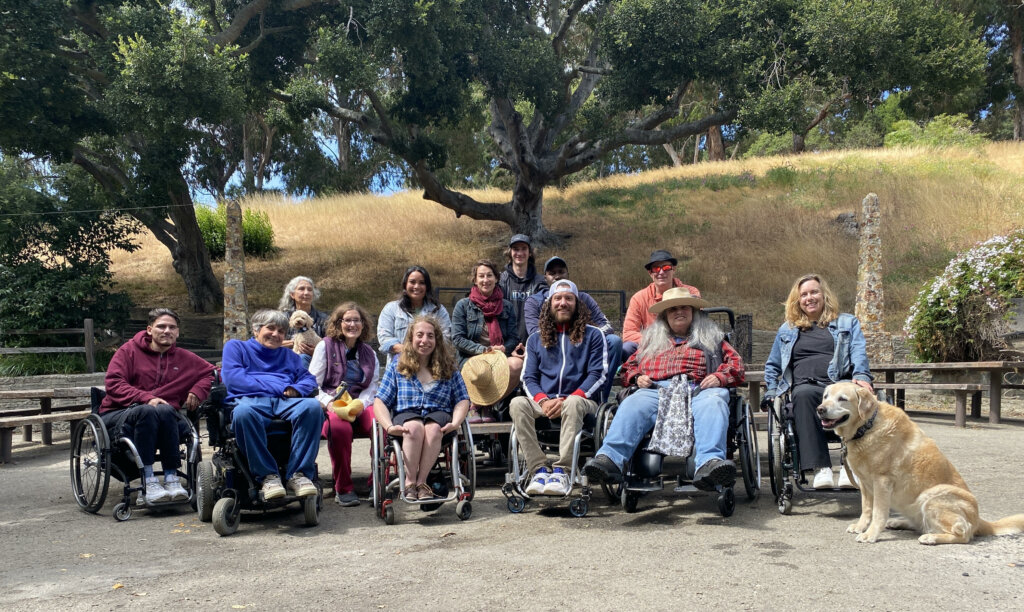
Bay Area Outreach & Recreation Program (BORP) is a 501(c)3 non-profit organization working to improve the health, independence and social integration of people with physical disabilities through sports, fitness and recreation programs. At BORP, we believe that sports and recreation provide a path to greater achievement to which all people should have access, and we continually strive to make this a reality.
BORP is headquartered in Berkeley, California and is the leading provider and promoter of accessible sports and recreation opportunities for children and adults with physical disabilities in the greater San Francisco Bay Area. In addition to our high quality innovative sports and recreation programs, our expert staff provides advocacy, trainings, referrals and consultation services and have helped initiate adaptive sports programs in several other cities across the state. BORP also conducts disability awareness trainings and adaptive sports exhibitions for a variety of community agencies and serves as a valuable resource to physical therapists, rehabilitation hospitals, parks and recreation departments and related organizations.
top
Three Decades of Success
BORP was founded in 1976, by people with disabilities to create access to the outdoors, to fitness, to sports and to recreation for a population that had been left out. In the 1970”s, there simply were no recreation programs in the state specifically for people with disabilities. Initially started as a small student program at UC Berkeley, BORP has since grown to serve children, adults and families from all over the greater Bay Area. Over the past 30 years, thousands of people have benefited from our innovative programs, trainings, referrals and consultations.
top
Innovative Programs
BORP offers year-round sports and recreation programs serving a wide variety of ages, interests and abilities. We serve people with many different types of physical disabilities including, but not limited to: amputations, paraplegia, quadriplegia, cerebral palsy, head injuries, multiple sclerosis, muscular dystrophy, spina bifida, strokes, sensory and visual impairments. Our activities incorporate volunteers with and without disabilities and are offered on a low-cost, no-cost, or sliding scale basis as appropriate. Transportation to many program activities is provided, as we have found that this is a critical barrier to participation for many people and contributes to the success of our programs. BORP also provides financial assistance to low-income participants and families to help cover sports equipment and tournament travel costs.
BORP’s programs are organized into five major areas:
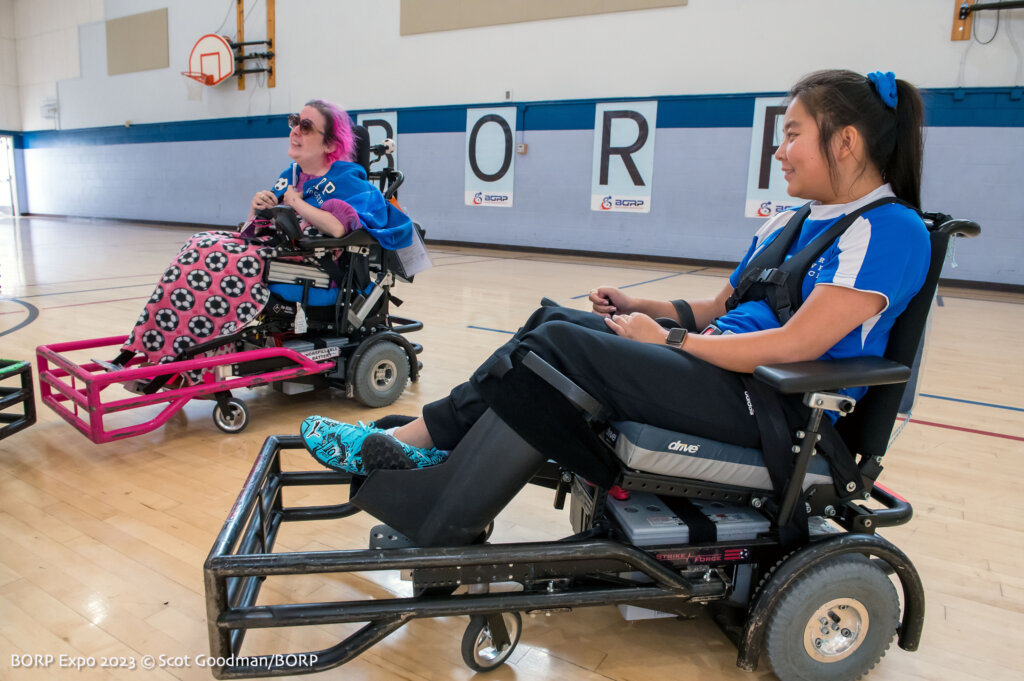
The Youth Sports Program offers year-round competitive and recreational sports activities for children and youth with physical disabilities ages 5-19, including wheelchair basketball, power soccer, sled hockey, and adaptive cycling. Under the guidance of caring volunteer alumni coaches and staff, young athletes build confidence, self-esteem and independence while developing lifetime fitness habits. Youth teams have opportunities for travel to local and national tournaments. Currently we are conducting an outreach project in the city of Oakland to increase participation of underserved Oakland youth with disabilities in our programs.
The Adult Sports Program offers year-round activities five nights a week, including wheelchair basketball, power soccer, and Goalball (a unique sport for individuals with visual impairments). Emphasis is on increasing fitness and playing skills, with opportunities for local and regional tournament team participation. This program provides a structured sports environment for our graduating youth program participants, as well as opportunities for disabled adults trying sports for the first time. For many of our participants, our programs are their only opportunity for establishing a regular fitness routine.
The Adventures & Outings Program provides people with physical disabilities and their families access to the many wonderful outdoor and urban attractions that the Bay Area has to offer in a supportive and integrated environment. This popular and growing program provides a wide variety of organized group activities appealing to people of all ages and abilities. Participants get out into nature, explore their communities, get fresh air and exercise, and try new activities that they never thought possible for themselves. BORP offers weekly urban outings such as theater trips, museum tours, and art festivals as well as more adventurous outdoor excursions including guided walks and nature hikes on local blind and accessible trails, adaptive skiing trips, kayaking, rafting, and whale watching.
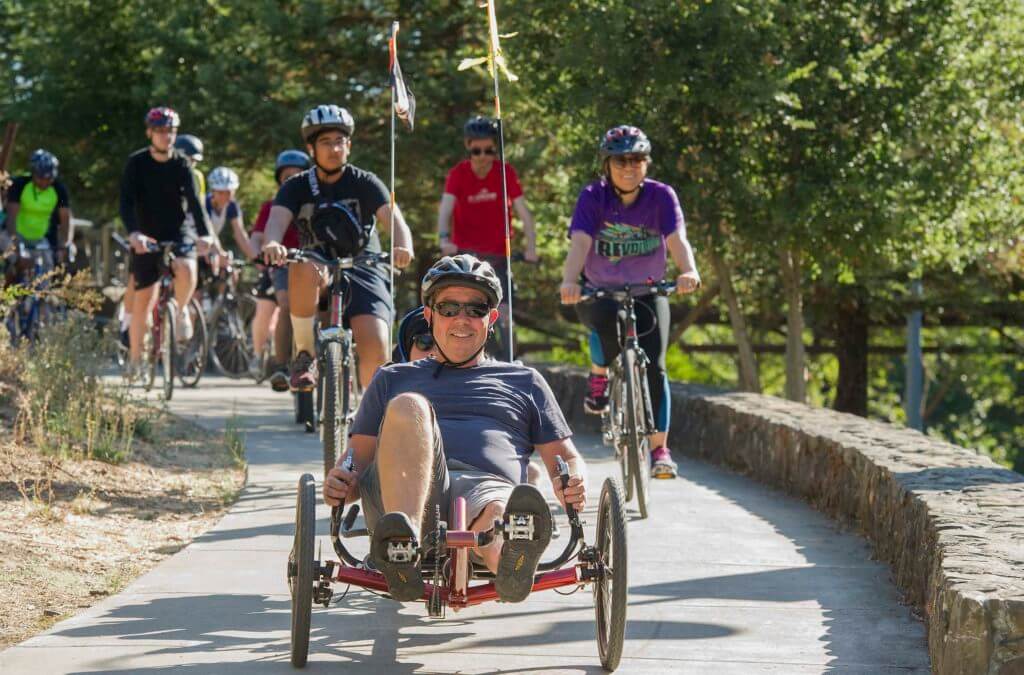
The Adaptive Cycling Program is an integrated program serving people of all ages with disabilities and their families and friends. Participants with mobility challenges and visual impairments can ride in organized group rides, own their own, or with family and friends. With the support of our knowledgeable staff and dedicated volunteers, cyclists of all ability levels explore local Bay Area biking trails throughout the year using our large fleet of adaptive cycles, including tandems, hand cycles, recumbents, standard bikes and three-wheelers. Many participants train for BORP’s annual fundraising ride, the Revolution Ride, which takes place each Fall in the beautiful Sonoma wine country. The Revolution is a fun and challenging day of personal achievement that brings out the whole community to help raise money for BORP’s programs.
The BORP Fitness Studio opened in November 2010 and provides group exercise classes in a fully integrated environment, serving both people with and without disabilities. The BORP Fitness Studio is the only group exercise space in the greater Bay Area that serves everyone. Fitness classes have included Adaptive Yoga, Core Conditioning, Upper Body Strengthening, Tai Chi, Feldenkrais, Adaptive Yoga for the Blind/Visually Impaired and more. Classes are offered on a fee-per-class basis and change periodically based on participant interest and demand. All classes are adaptable for all ages and abilities, and instructors are ready and willing to find what works for each participant.
top
The Need
Children with disabilities are one of the highest at-risk groups in this country, a fact that garners little attention and fewer resources. Government data paints a bleak outlook:
- A disabled student is twice as likely as his or her non-disabled peer to drop out of school, become a pregnant teen, or abuse drugs and alcohol. 1
- A disabled teenage girl is twice as likely to commit suicide as her non-disabled peers. 2
- 73% of disabled adult Americans are unemployed. 3
We know that participation in team sports has a positive effect on future life success. For youth with disabilities, the effects are even more dramatic than their able-bodied peers. We also know that kids who participate in organized sports and recreation programs are twice as likely to maintain a fitness program as an adult as they would be if they had been introduced to physical fitness later in life. But for youth with disabilities there is a tragic lack of opportunity to access these kinds of activities; adaptive sports and recreation are not offered by schools or by most city recreation departments. At the same time there is such a dire need, considering the high rate of secondary health problems (obesity, diabetes and hypertension) people with disabilities regularly suffer as a result of inactivity. BORP’s programs are working to address this critical gap.
top
The Results
BORP is creating opportunities, improving the odds and changing lives. Through our programs, our participants develop positive body images, establish healthy living habits, increase their athletic prowess, gain independence, and take responsibility not only for their success in the program, but also for their own success in life.
BORP athletes defy statistics. Over the past 10 years, 98% of BORP’s youth alumni have graduated from high school. Over 80% have gone on to college. Over 70% are employed. These statistics are in sharp contrast with national data on disabled populations, and are particularly impressive given the fact that the majority of our participants come from low-income households.
Want to learn more about BORP? Contact Us today.
Help support our efforts.
References
- U. S. Department of Education (1997)
- ibid.
- US Census Bureau (2000)